



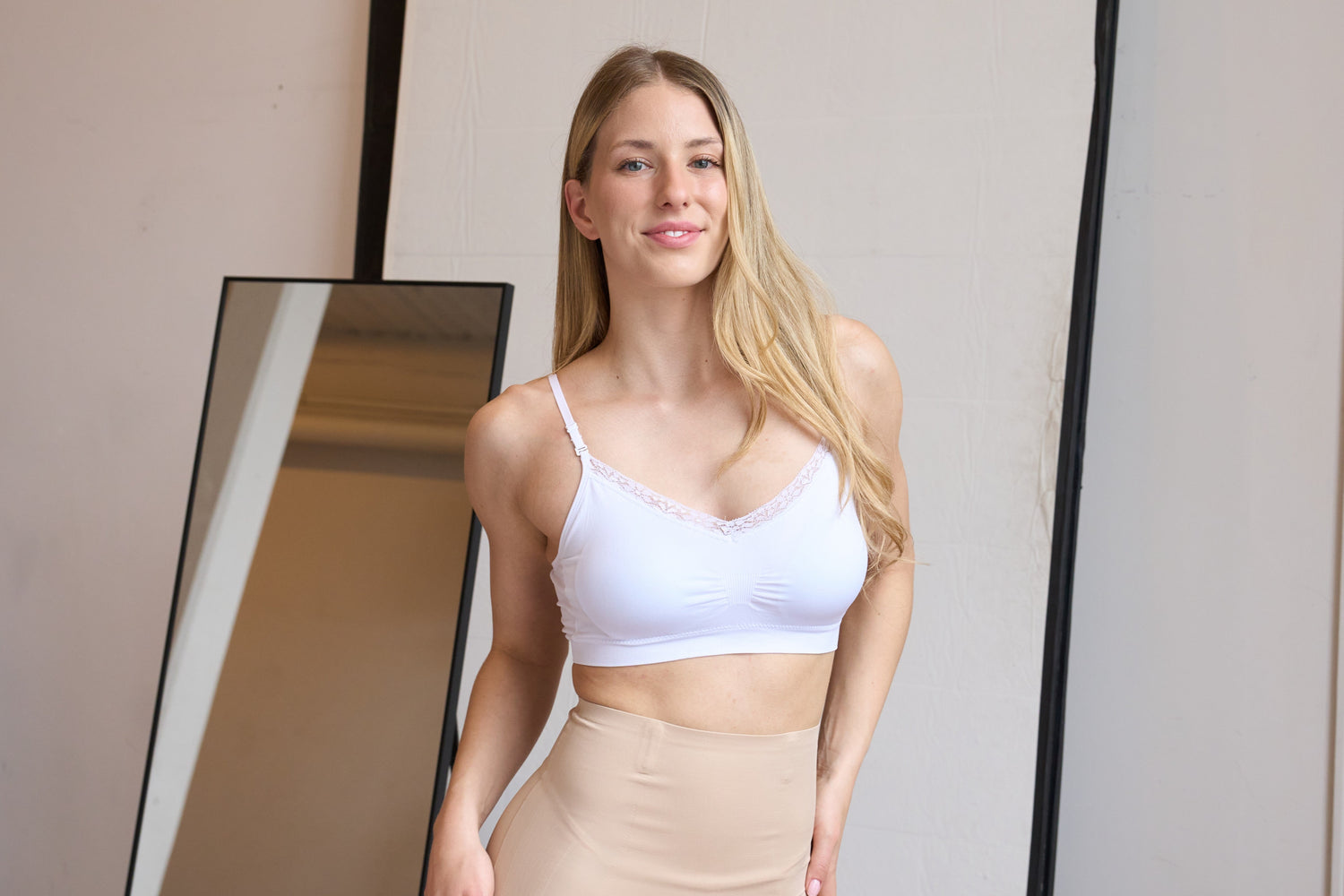
What You'll Need
You’ll only need a soft measuring tape and a few quiet minutes. A non‑padded bra can help keep things consistent, but measuring without a bra is completely fine too. Stand naturally in front of a mirror if you have one, relax your shoulders, and don’t pull the tape too tight.
Step 1: Measure Your Band Size (Underbust)
This measurement determines the number in your bra size.Wrap the measuring tape snugly around your ribcage, directly under your bust. Keep the tape level all the way around.Write this number down in inches.
Example: 32 inches → band size 32
If you get an odd number, round to the nearest even number.

Step 2: Measure Your Bust Size (Overbust)
This measurement helps determine your cup size.
Wrap the tape around the fullest part of your bust. The tap e should rest gently—not digging in, not loose—and stay parallel to the floor.
Step 3: Calculate Your Cup Size
Now subtract:
Bust measurement − Band measurement = Cup size
| Difference (inches) | Cup Size |
|---|---|
| 1 | A |
| 2 | B |
| 3 | C |
| 4 | D |
| 5 | DD / E |
| 6 | DDD / F |
Example:
Bust: 36 inches
Band: 32 inches
Difference: 4 inches → D cup
Your bra size would be 32D.
If You’re Between Sizes
Being between sizes is very common. In everyday wear, many people prefer a slightly looser band for comfort, especially if they’re wearing bras for long hours. Stretchy or seamless styles tend to be more forgiving when your measurements don’t land perfectly on a size chart.Ultimately, how the bra feels on your body matters more than the number on the tag.







Leave a comment
This site is protected by hCaptcha and the hCaptcha Privacy Policy and Terms of Service apply.